
Call: 08045815154
 Send Inquiry
 Send Inquiry
Desiccant Air Dryer
Price 25000 INR/ Piece
MOQ : 1 Piece
Desiccant Air Dryer Specification
- Power Input
- AC
- Dimension (L*W*H)
- Varies by model (compact design)
- Pressure
- Maximum up to 16 bar
- Drive
- Direct Drive
- Inlet Temperature
- Maximum 50C
- Temperature
- Ambient to 50C
- Power Consumption
- 0.5 - 2.2 kW (Depending on Model)
- Place of Origin
- India
- Inlet Oil Content
- <0.01 ppm
- Noise Level
- Low (<70 dB)
- Power Output
- Clean, Dry Air
- Power Mode
- Single/Three Phase
- Heating Power
- Depends on Model, up to 6 kW
- Air Flow
- 10 - 3000 Nm3/hr (Depending on Model)
- Usage
- Industrial
- Power Source
- Electric
- Lubrication Type
- Oil Free
- Product Type
- Desiccant Air Dryer
- Voltage
- 220-240 V
- Dew Point
- -40C (typical), up to -80C optional
- Cycle Time
- Adjustable
- Application
- Compressed Air Drying for Industrial Use
- Connection Size
- 1/2" to 4" (varies with model)
- Working Principle
- Pressure Swing Adsorption (PSA)
- Regeneration Method
- Heated/Heatless
- Control System
- PLC/Automatic Control
- Mounting
- Floor Mounted
- Desiccant Type
- Activated Alumina / Molecular Sieve
- Color
- Blue or Customized
Desiccant Air Dryer Trade Information
- Minimum Order Quantity
- 1 Piece
- Supply Ability
- 100 Pieces Per Week
- Delivery Time
- 1 Week
About Desiccant Air Dryer
We are able to supply a wide stock of Desiccant Air Dryer. It is ensuring a continuous air drying cycle. This dryer is to operate at significantly lower dew points which facilitates the elimination of moisture. Apart from this, provided dryer is to suppress the dew point of your compressed air by removing water effectively from it. Desiccant Air Dryer is easy to repair and maintain due to its great tools materials.
Specification
| Minimum Order Quantity | 1 Piece |
| Model Name/Number | AD-5 |
| Dryer Technology | PSA type |
| Minimum Output Dew Point | -40 C |
| Dryer Horse Power | 1HP onwards |
| Brand | A1 |
| Dryer Brand | A1 |
| Color | Industrial |
| Maximum Pressure | 4 bar |
| Maximum Pressure (in bar) | 4 bar |
| Minimum Output Dew Point (in C) | -40 C |
| Noise Level | 70 dp |
| Drying Capacity (in cfm) | 5 - 2000 CFM |
| Voltage | 220 V |
Exceptional Drying Performance
Achieve ultra-low dew points as low as -80C, depending on your operational needs. The advanced PSA technology and premium desiccants-activated alumina or molecular sieve-ensure consistently dry, oil-free air for mission-critical industrial processes.
Energy Efficient and Versatile Control
Our dryers feature PLC/automatic controls and offer adjustable cycle times for optimized performance and efficiency. With flexible regeneration options (heated or heatless) and multiple connection sizes, these dryers adapt to varying industrial requirements while maintaining low power consumption.
Rugged Design and Flexible Installation
Built for durability and ease of installation, the units are compact, floor-mounted, and available in a choice of blue or customized colors. Highly efficient noise suppression ensures a quiet work environment, while the robust construction supports continued operation in ambient temperatures up to 50C.
FAQ's of Desiccant Air Dryer:
Q: How does the Desiccant Air Dryer achieve such low dew points?
A: The dryer uses pressure swing adsorption (PSA) technology with high-quality activated alumina or molecular sieve desiccants. These materials adsorb water vapor efficiently, enabling the system to deliver dew points as low as -40C (standard) and even -80C (optional) for demanding industrial applications.Q: What applications is this air dryer best suited for?
A: This desiccant air dryer is ideal for compressed air drying in a wide range of industrial environments, such as manufacturing plants, electronics, pharmaceuticals, food processing, and any application where moisture-free air is essential for product quality and equipment longevity.Q: When should I choose the heated versus heatless regeneration method?
A: Heatless regeneration is best for facilities where energy consumption must be minimized and air flow is continuous. Heated regeneration is suitable when energy cost is less critical and you need to maximize desiccant longevity or manage larger air volumes. Both methods are available to match your specific operational needs.Q: Where can the Desiccant Air Dryer be installed?
A: The unit is designed for floor mounting and features a compact build, allowing installation even in space-constrained industrial settings. Its robust design and low noise levels make it suitable for indoor industrial plants across various sectors.Q: What is the process of air drying in this system?
A: Compressed air enters the dryer and passes through a desiccant chamber where moisture is adsorbed. The unit alternates between adsorption and regeneration cycles, managed by a PLC/automatic control system, to ensure a continuous supply of clean, dry air.Q: How does the adjustable cycle time benefit my operations?
A: Adjustable cycle times enable you to fine-tune the working periods for adsorption and regeneration based on factors like air demand, inlet humidity, and temperature. This customization ensures energy-efficient operation and optimal desiccant performance.Q: What are the main benefits of using this desiccant air dryer in my facility?
A: Key advantages include consistently dry, oil-free compressed air; energy-saving operation; low noise generation; flexible installation options; and a control system that reduces manual intervention. These features help maintain equipment reliability and product quality while optimizing operational costs.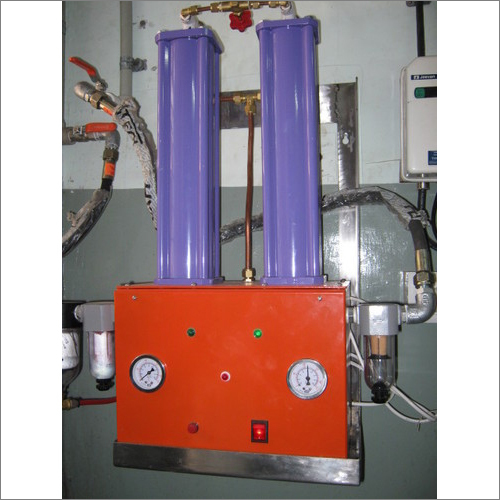
Tell us about your requirement

Price:
Quantity
Select Unit
- 50
- 100
- 200
- 250
- 500
- 1000+
Additional detail
Mobile number
Email

More Products in Air Dryers Category
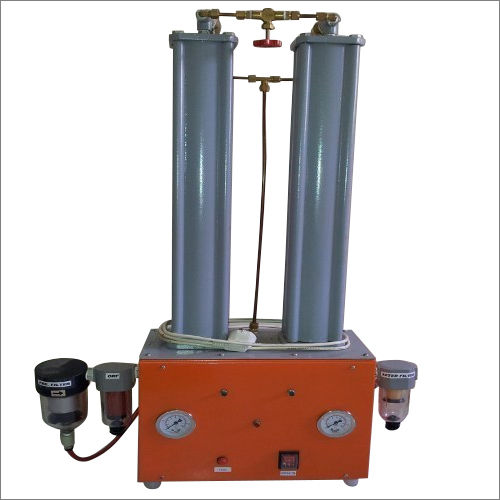
Air Dryer For Industrial Process
Price 22000 INR / Piece
Minimum Order Quantity : 1 Piece
Usage : Industrial
Voltage : 220240 V
Power Source : Others
Product Type : Air Dryer For Industrial Process
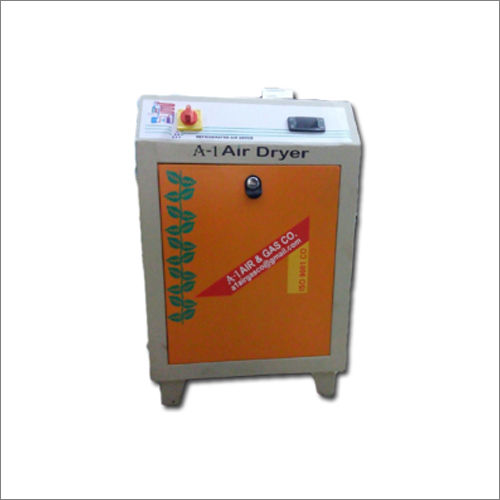
Refrigerated Air Dryer
Price 25000 INR / Piece
Minimum Order Quantity : 1 Piece
Usage : Industrial
Voltage : 215415 Volt (v)
Power Source : Electric
Product Type : Refrigerated Air Dryer
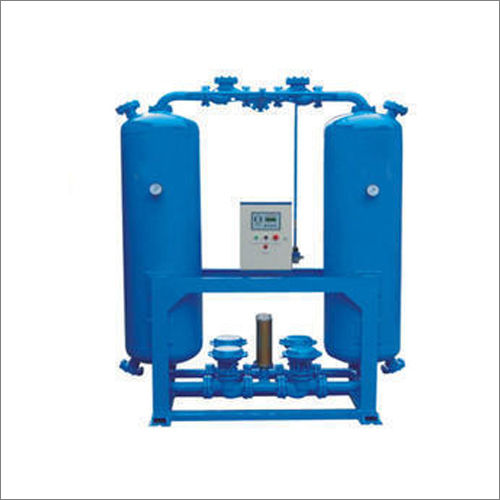
Adsorption Air Dryer
Price 25000 INR / Piece
Minimum Order Quantity : 1 Piece
Usage : Industrial
Voltage : 15 Horsepower (HP)
Power Source : Electric
Product Type : Adsorption Air Dryer

Contact Details
A-1 AIR & GAS CO.
GST : 27ABAPD1219M1ZY
- 15, Dattani Apartment Building No. 5 A, Shivaji Road, Off MG Road,Mumbai - 400067, Maharashtra, India
- Phone :08045815154
 Send Inquiry
Developed and Managed by Infocom Network Private Limited.
